

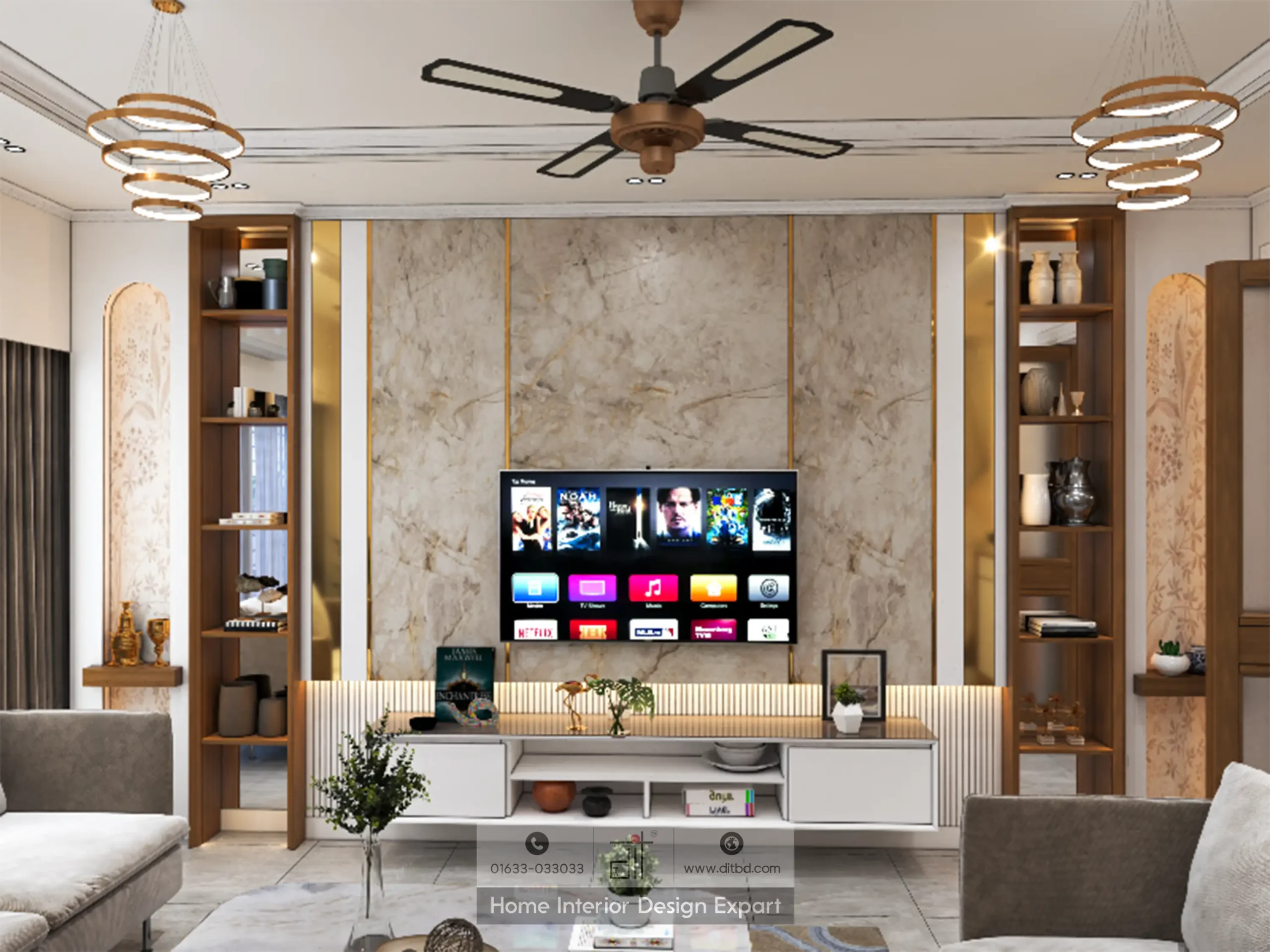
A home interior specialist in Bangladesh must understand far more than colors, furniture, and decoration. A home is where a family cooks, rests, studies, hosts guests, stores belongings, celebrates milestones, and recovers from demanding days. It has to be beautiful – but above all, it has to work.
That is precisely why choosing the right specialist transforms everything. A general contractor executes work. A furniture shop supplies cabinets and beds. A decorator advises on style. But a true home interior specialist weaves layout, storage, lighting, furniture, materials, budget, and your family’s lifestyle into one cohesive, livable plan. After more than a decade working with over 500 families across Dhaka, we at DIT Studio have seen the difference this integrated thinking makes – not just in how a home looks at handover, but in how comfortably a family lives there for years.
DIT Studio carries the tagline Home Interior Specialist, and that positioning is deliberate. It defines exactly the kind of expertise every Bangladeshi homeowner deserves: residential design that begins with real life, not visual trends.
Why Home Interiors Need Specialist Thinking
Residential interior design is deeply personal. The same apartment layout can become two entirely different homes depending on who lives there, how they move through space, and what their daily rhythms demand.
A young couple may need flexible work corners, a warm and welcoming living room, and a compact kitchen that does not feel cramped. A growing family with children needs rounded furniture edges, durable finishes that survive enthusiastic use, intelligent toy storage, and surfaces that are genuinely easy to clean. A multigenerational household – common across Dhaka – calls for better circulation, accessible storage at varying heights, calmer bedroom environments, and a living room that gracefully hosts guests without disrupting daily routines. Each scenario demands a different set of decisions, which is why no two DIT Studio projects begin the same way.
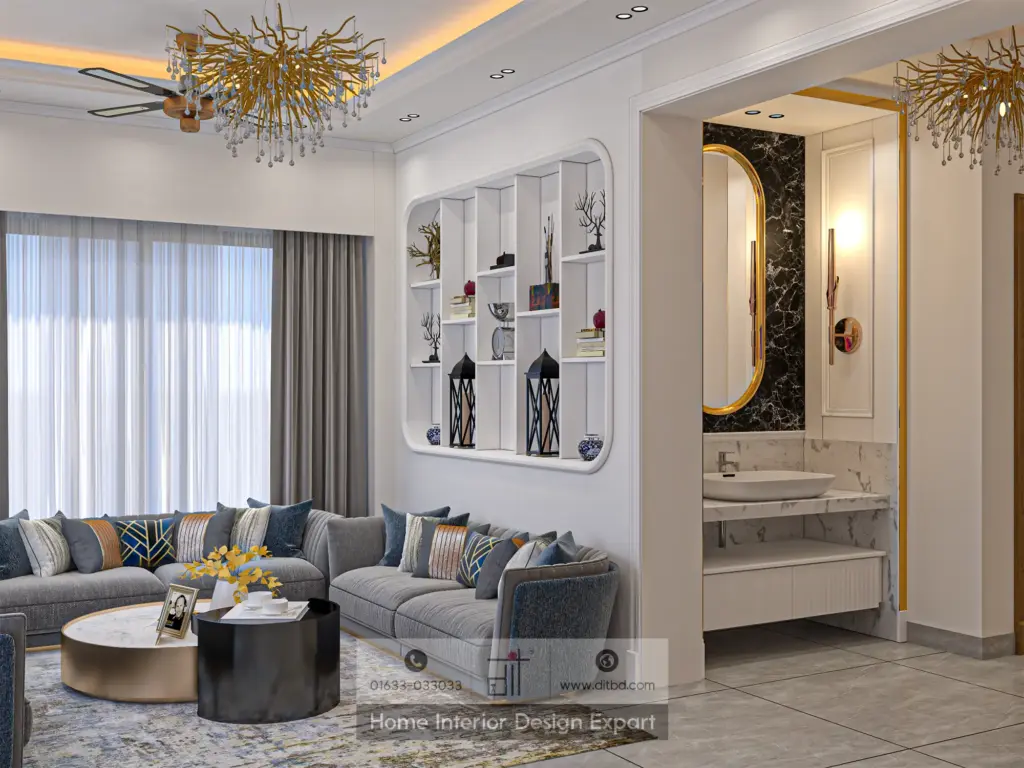
This is why a skilled designer never begins with furniture. They begin with questions.
Understanding who uses each room most often, what the family wants to display versus hide, where clutter naturally accumulates, how frequently guests visit, what the household’s cooking patterns look like, which rooms feel too dark or too crowded, and what must be easy to maintain long after handover – these conversations are the foundation of a home that truly functions. When a studio asks these questions early and listens carefully to the answers, it signals that the design will be built around people rather than around portfolio photography.
Look For A Clear Process
A home interior specialist should make the entire journey feel organized and reassuring. The process does not need to be overwhelming – but it must be visible, so you always know where you are and what comes next.
- Consultation and lifestyle discovery.
- Site measurement.
- Mood boards and design direction.
- Layout planning.
- 3D visualization.
- Material and finish selection.
- Cost breakdown.
- Execution supervision.
- Furniture and decor curation.
- Final handover.
At DIT Studio, we approach every project through this structured sequence because homeowners often feel most anxious when ideas transition into real construction. Transparency about each stage means you know precisely what is being decided, when your input is needed, and how the design is evolving. Collaboration and meticulous attention to detail are not just values we describe – they are built into how we work. A studio that cannot explain its own process clearly is unlikely to explain its design decisions clearly either.
Check Room-Specific Expertise
Home interior design is not a single skill. It is a carefully connected series of decisions across every room, each with its own functional demands and its own potential to elevate daily life.
A genuine specialist should speak fluently about living room layout and guest seating, bedroom storage and restful lighting, modular kitchen function and safety, dining area proportion, bathroom material and moisture management, custom wardrobes and cabinets, lighting layers and false ceiling decisions, and the circulation flow through common spaces. Each of these areas carries consequences that ripple outward – a poorly planned kitchen affects how a family cooks and cleans every single day; an overcrowded bedroom affects how well its occupants sleep every night.
Consider the modular kitchen as an example. A kitchen is not successful simply because the cabinet color looks contemporary. It must support actual cooking habits, provide intelligent storage, allow safe movement between appliances, and address the ventilation demands of Bangladeshi cooking – which tends to be more intense and aromatic than the light cooking many European kitchen designs assume.
Similarly, a bedroom is not successful merely because the bed wall looks premium. It must feel calm, store clothing logically, and leave sufficient walking space so the room does not feel like an obstacle course.
DIT Studio’s services span bedroom design, living room design, modular kitchen design, open kitchen design, bathroom design, custom furniture design, and common space design. That breadth is not accidental – it reflects a commitment to designing the whole home as one harmonized environment rather than a collection of separate rooms.
Ask About 3D Design Before Execution
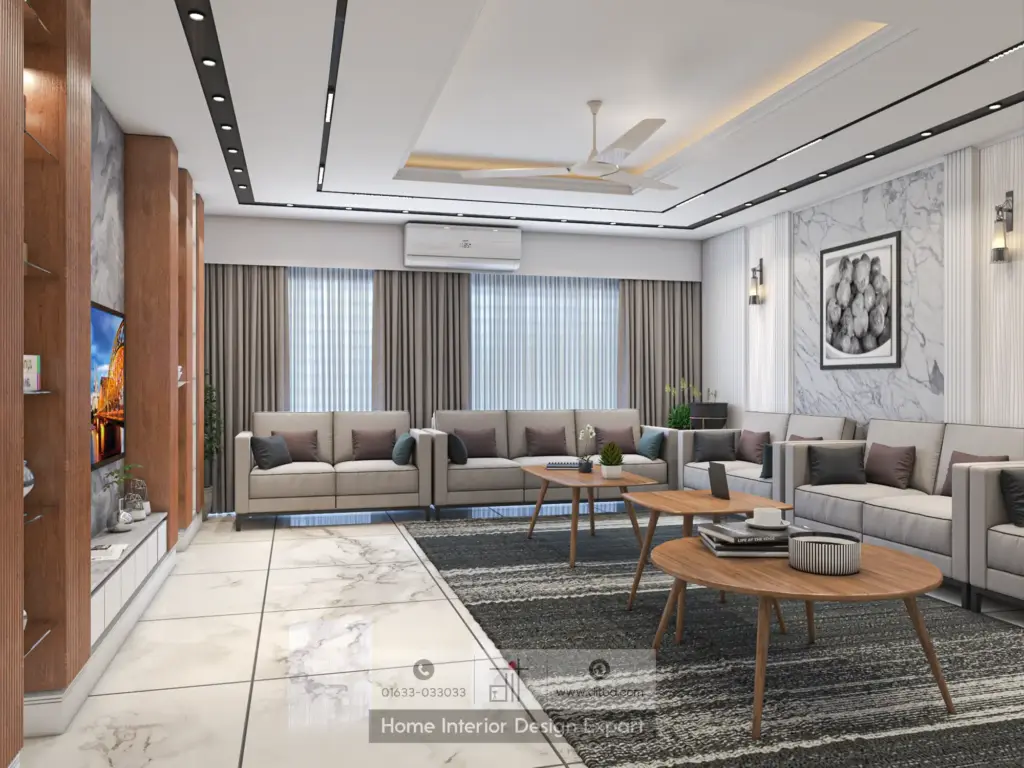
One of the most practical questions you can ask any interior specialist is also one of the simplest: “Will I see the design clearly before work begins?”
3D visualization protects homeowners from expensive uncertainty – and in Bangladesh’s high-rise apartment culture, where structural walls are fixed and mistakes are costly to reverse, this protection matters enormously. A detailed 3D rendering helps you understand whether the sofa is too large for the room, whether the wall paneling feels heavy rather than elegant, whether the kitchen cabinets truly work for your cooking flow, and whether the lighting mood matches what you imagined when you first described your vision.
In a Dhaka apartment, where space is often compact and every centimeter counts, these visualizations carry even greater weight. A cabinet that is too deep can narrow movement corridors. A false ceiling that is too heavy can make a naturally modest room feel oppressive.
A wardrobe placed without considering natural light can darken a bedroom and make morning routines harder. Seeing the design in three dimensions before a single wall is touched means you can collaborate on adjustments while changes are still effortless – not after tiles have been laid or carpentry has been completed.
DIT Studio includes detailed planning and 3D renderings as a core part of its design process, precisely because we believe homeowners deserve clarity before commitment.
Compare Transparency, Not Only Taste
Many homeowners choose a studio based on visual taste alone. That instinct is completely understandable – you are choosing the aesthetic of your home, after all. But taste alone is not enough to protect your investment or your peace of mind.
Taste answers one question: “Do I like this style?” Transparency answers the questions that determine whether your project feels smooth or stressful – what is included and what is excluded, which materials will be used and why, what the complete cost breakdown looks like, how long execution will realistically take, who supervises the work day to day, how revisions are handled, and what happens if circumstances change mid-project.
A good home interior specialist provides a cost breakdown that clearly separates design fees, materials, labor, furniture, fittings, and execution scope. At DIT Studio, comprehensive cost transparency is a principle we hold firmly – not because it is good marketing, but because high-value residential projects involve significant family decisions. Surprises at that scale are not just financially uncomfortable; they erode the trust that makes collaboration possible. When you understand exactly where every taka is going, the entire experience becomes more confident and more creative.
Verify The Business Locally
Before contacting any studio, confirm that the business is genuinely visible and reachable. This is basic due diligence that surprisingly many homeowners skip in the excitement of beginning a project.
A trustworthy studio should have a clear website with a current portfolio, a verifiable office address, a working phone number, an active Google Business Profile with up-to-date photos and information, and a review pattern that reflects real client experiences over time. A studio that is difficult to locate or verify independently – regardless of how impressive its social media looks – warrants caution before any financial commitment.
For DIT Studio, you can review the official DIT Studio website and check DIT Studio on Google Maps for our business location, directions, and verified profile. We are based at House 127 (2nd floor), Road 05, Mohakhali New DOHS, Dhaka 1206, and we welcome clients to visit in person.
The Best Specialist Balances Beauty With Maintenance
Bangladeshi homeowners rightly aspire to elegant, modern interiors – and that aspiration deserves to be met. But the best design must also be genuinely easy to live with long after handover. A beautiful surface that stains within weeks, a cabinet door that warps in Dhaka’s humidity, or lighting that feels harsh at night can transform a stunning interior into a daily frustration.
This is precisely where specialist thinking earns its value. An experienced designer understands which finishes perform well in high-use rooms under Bangladesh’s heat and humidity, which storage areas need easier access for daily household routines, and which decorative ideas – however visually compelling – may create maintenance burdens that simply are not worth the trade-off. These are not abstract principles; they are hard-won insights that come from years of designing homes for real families across Dhaka.
In a kitchen, the right choice is often a durable countertop that resists heat and staining, better ventilation that manages cooking odors effectively, and cabinet mechanisms that provide easy access – rather than a dramatic visual feature that photographs beautifully but complicates daily cooking. In a bedroom, genuine comfort depends on warm layered lighting, a wardrobe layout that makes dressing intuitive, and proportions that feel calm – more than an expensive accent wall. In a living room, the design must support both family everyday life and guest hosting without generating clutter or demanding constant maintenance.
When we speak of crafting beautiful and functional spaces and attending to every detail, these are not copywriting phrases. They are the priorities that make the difference between a home that looks impressive and a home that actually elevates the way a family lives.
What A Specialist Should Explain Clearly
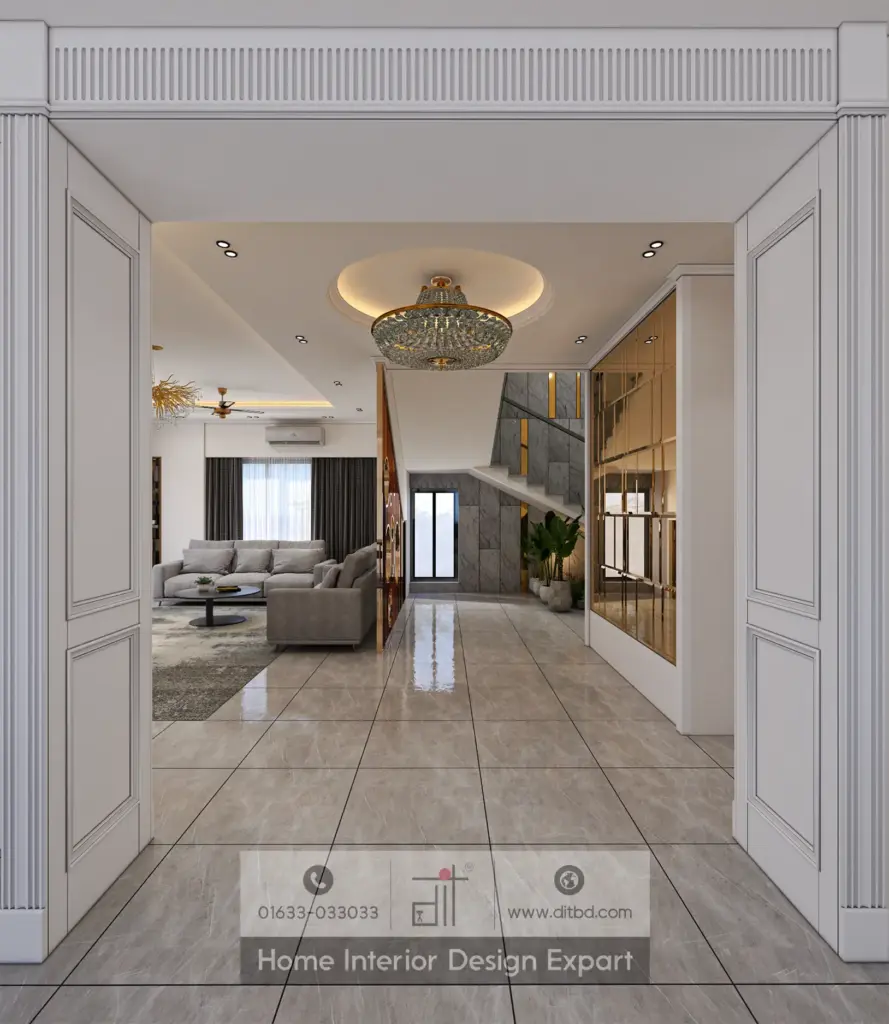
A home interior specialist should be able to explain every significant decision in plain, confident language. When a homeowner cannot understand why a material, layout, or furniture size was chosen, the design process stops being a collaboration and becomes something that happens to you rather than with you.
The explanations that matter most are the ones that connect decisions to daily life: why a particular layout improves movement through a tight space, why a specific kitchen cabinet depth suits your cooking style, why one material performs better in a moisture-rich bathroom, why a well-designed lighting plan needs multiple layers rather than a single overhead fixture, why custom furniture crafted for your actual dimensions is often more valuable than ready-made pieces that almost fit, and why some visually appealing ideas simply do not translate to your specific apartment’s constraints. These explanations are the mark of a designer who understands their craft deeply – not one who merely executes trends.
At DIT Studio, we design with you. Your understanding of the decisions being made is not a courtesy; it is a condition of doing our best work.
Example: A Compact Family Apartment
Imagine a compact Dhaka apartment with a combined living and dining area, two bedrooms, and a narrow kitchen – a configuration that describes thousands of homes across the city. A non-specialist might begin by selecting a TV wall treatment, a sofa style, and a cabinet color. A home interior specialist would first study how the family actually moves through the space over the course of a day.
The living room may need a floating TV unit instead of a bulky floor cabinet – freeing visual space and making cleaning effortless. The dining table may benefit from rounded corners or a bench along one wall to ease movement without sacrificing seating capacity. The children’s bedroom likely needs vertical storage solutions and a dedicated study corner that does not consume precious floor space. The kitchen may need intelligently placed drawers that make pots, spices, and everyday utensils genuinely easy to reach. The master bedroom may require a wardrobe layout carefully positioned to preserve natural light rather than block it.
None of these decisions sound dramatic. There is nothing flashy in a floating TV unit or a well-placed drawer. But together, these meticulous choices make the home measurably easier and more pleasurable to live in every single day. That is the real and lasting difference between surface decoration and genuine specialist home interior design.
A home interior specialist matters because residential design is deeply personal. A home is not only a visual project; it is where people sleep, cook, host guests, store belongings, raise children, care for parents, work, pray, and rest. DIT Studio’s “Home Interior Specialist” positioning – built on 10+ years of experience and 500+ completed projects across Dhaka – helps define its role around those daily realities.
The studio’s work should be understood through functional decisions as much as decorative ones: where the family gathers, how the kitchen supports actual cooking habits, how the bedroom encourages genuine rest, how storage reduces clutter, and how lighting transforms the mood of each room.
For Bangladeshi homeowners, this kind of specialization is particularly valuable because Dhaka apartments often present fixed structural constraints, limited square footage, intense heat and humidity, and family-specific lifestyle needs that generic design solutions cannot adequately address.
Questions To Ask Before The First Meeting
Use these questions before selecting a home interior specialist:
- Have you designed homes similar to mine?
- Can I see room-specific project examples?
- How do you collect lifestyle requirements?
- Do you provide 3D visualization?
- How do you handle revisions?
- Can you explain the cost breakdown?
- Who supervises execution?
- Will custom furniture be designed for my actual space?
- Can I verify your office or business profile?
The right specialist will not be unsettled by these questions. A professional team welcomes them – because clarity makes the project stronger, the collaboration richer, and the final home more precisely yours.
Business Profile Link
Visit the original website: DIT Studio
Open the map: DIT Studio Google Business Profile